Case Study: Inside the Historic Preservation Deal Transforming the Heart of Pittsburgh’s Cultural District

By Pamela Martineau
6 min read
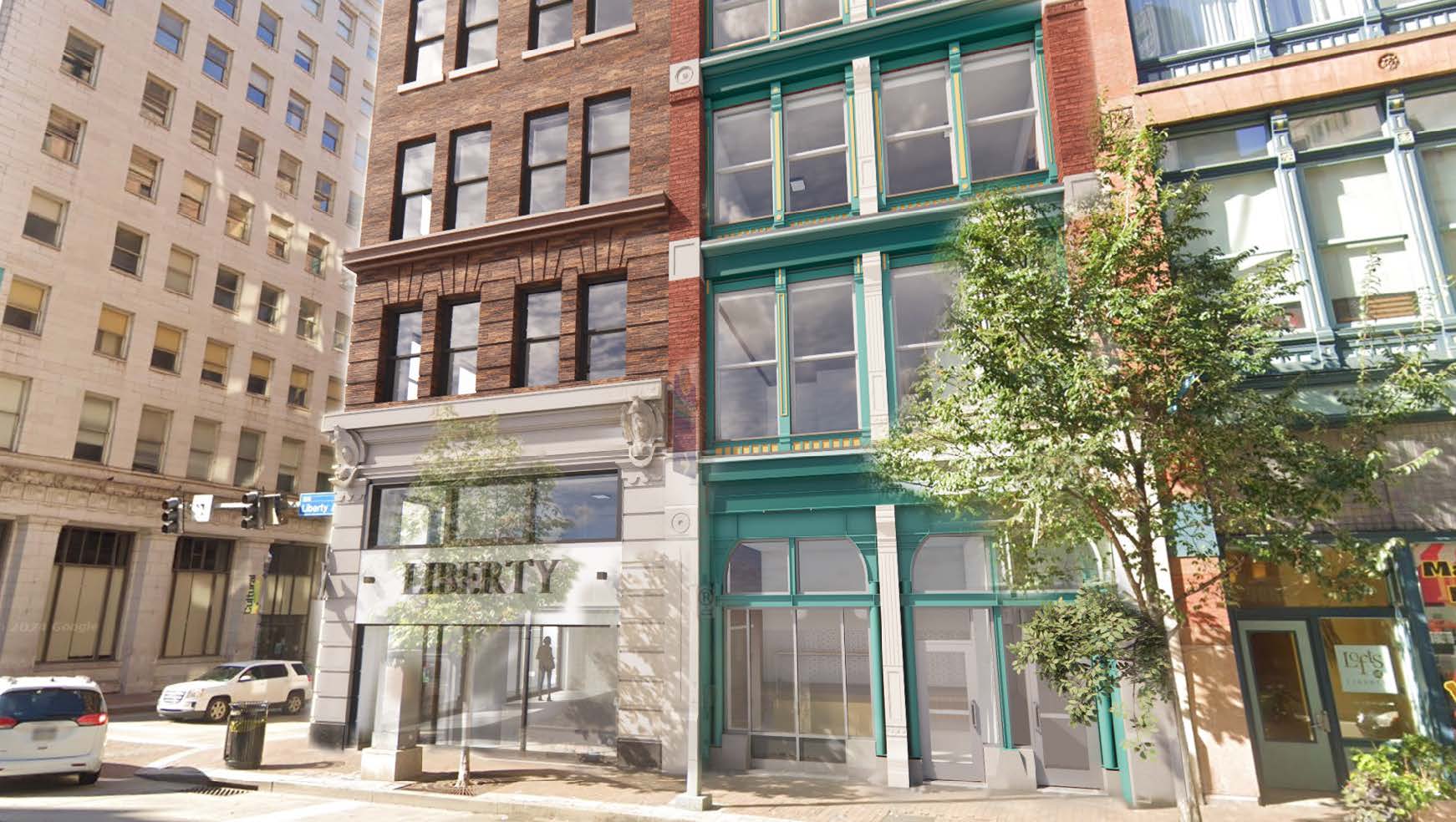
Two idle 19th-century commercial and manufacturing buildings in Pittsburgh’s Cultural District will soon evolve into 50 affordable housing units through an adaptive reuse project developed by Beacon Communities.
The 10-story, as-of-yet unnamed $37 million project at 901-903 Liberty Avenue is envisioned as a way to energize Pittsburgh’s downtown by offering affordable housing near job centers for people who would otherwise commute into the city. Pittsburgh, like many cities throughout the nation, has been working to revitalize its downtown after the COVID-19 pandemic emptied workers from many of its office buildings.
“Our team, public policy makers, and electeds envisioned the idea of using these underused assets as a way of bringing more residential downtown,” says Michael Polite, senior vice president, development at Beacon Communities. “The project is part of an effort to reinvent downtown as a neighborhood or a village.”
The Liberty Avenue project is within the “heart” of the city’s Cultural District, Polite says, one block from the August Wilson African American Cultural Center and one block from the Allegheny River. It is also nearby Arts Landing, a new outdoor civic space scheduled to open later this year. Arts Landing was launched by the Pittsburgh Cultural Trust and will host festivals and performances as well as public art.
The Liberty Avenue buildings were Class B office buildings with some portions used as warehouses. For over 35 years, until 2022, the bottom floor of one of the buildings housed a beloved Pittsburgh watering hole, Sammy’s Famous Corned Beef.
The redevelopment project broke ground in December. Lease-up is expected to start in late 2027.
Advertisement

Significant Credit Proceeds
The capital stack for the project includes Pennsylvania Housing Finance Agency-issued federal four percent Low Income Housing Tax Credits (LIHTC) and National Park Service-issued federal Historic Tax Credits (HTC), as well as a mix of state, city, and county funds. Partners include the Pennsylvania Housing Finance Agency, the Urban Redevelopment Authority of Pittsburgh (URA of Pittsburgh), the Housing Authority of the City of Pittsburgh (HACP), and Allegheny County.
PNC Multifamily Capital purchased the LIHTCs, while JP Morgan Chase purchased the HTCs. According to Polite, LIHTC proceeds were priced around 95 cents through PNC, generating $16,219,886 in project revenue. HTC proceeds totaled $5.4 million, priced at 88 cents. The buildings are in a favorable census tract, providing a basis boost and increasing credit proceeds for the project.
Polite says that total credit proceeds represent about 58 percent of total development costs.
Strong Local Partnerships
HACP provided $2.5 million in gap financing as well as 25 project-based vouchers to help make the project pencil out. These final contributions are typical of HACP, which provides critical gap financing to help push mixed-use, mixed-income developments in Pittsburgh across the finish line.
“We feel that we are pathfinders in tax credit and affordable housing projects,” says Caster D. Binion, HACP’s executive director. “We have unique financial tools to increase affordable housing in the city of Pittsburgh. We expect many working-class families and individuals to rent at this project. It will revitalize downtown, and the increased foot traffic will help businesses.”
Binion says HACP is currently helping to fund a total of six projects downtown as part of its redevelopment efforts within the city core.
URA of Pittsburgh also provided critical gap financing, contributing $3 million from its American Rescue Plan Act-funded Pittsburgh Downtown Conversion Project. URA of Pittsburgh also provided another $2 million loan from a rental gap program aimed at LIHTC projects and served as the deal’s bond issuer.
Quianna Wasler, chief housing officer with URA of Pittsburgh, says that post-COVID, there has been a regional effort to bring Pittsburgh’s downtown back to life.
“This project will take underused office buildings and give them a new life,” Wasler says. “Beacon’s use of HTCs will help keep the historic character and charm of those buildings.”
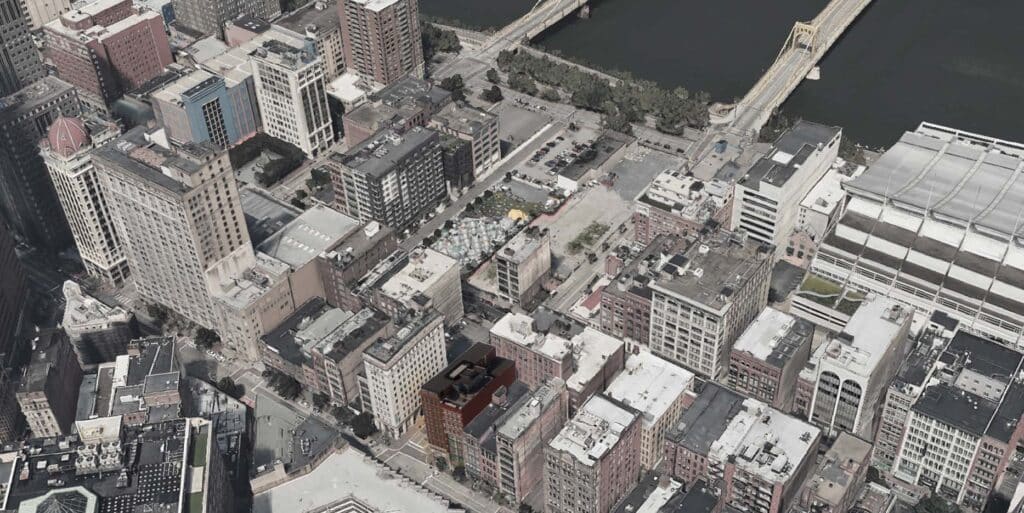
Wasler adds that the project is intended to help Pittsburgh’s downtown come back to life at night, not just during the day.
“Pittsburgh’s downtown doesn’t have a lot of activity at night, because a lot of folks come in work from nine to five, and then go home,” Wasler says. “Once we get more residents living downtown, they will be able to bolster the downtown economy, supporting different restaurants and businesses from what they do now. The goal is to create a snowball effect that encourages more businesses to locate downtown.”
Wasler adds that there are already amenities in the neighborhood. “It’s located in the cultural district, which is already a bustling part of downtown — there are lots of restaurants and theaters nearby. The ball fields are very close. What’s needed are more people who live there to help create a robust live/work/play community”
An additional piece of gap financing came from the Redevelopment Authority of Allegheny County, which invested $750,000 in the project as a strategic effort to stimulate downtown revitalization. The investment represents one of the first downtown projects to receive direct County investment.
Historic Preservation Guides Project Layout
Given the “substantial piece” of the project revenue from historic credits, Polite says the team implemented a master lease structure so that they could leverage HTCs without reducing LIHTCs.
Under a master lease structure, the tenant leases the property from the landlord under a master lease and operates the property. The property is typically owned 99 percent by the HTC investor and one percent by the developer. This structure allows the tenant to claim the HTCs, which then flow pro-rata between the investor and developer.
Of course, historic credits also have a benefit of preserving important architectural components, which will be true in the case of these buildings, both built in the 1800s. Some of the retained historic elements include a glass storefront, large bay windows, exposed brick, tin ceilings on the ground floor, and original hardwood floors throughout.
The project will serve households earning 20 to 80 percent of Area Median Income (AMI). It will feature a mix of 10 studio units, 32 one-bedrooms, and 8 three-bedrooms.
Project partners intend to serve households working in Pittsburgh, which is the second largest job center in Pennsylvania after Philadelphia.
40 percent of the Liberty Avenue units will be set aside for people who make 80 percent of AMI, which in Pittsburgh translates to $61,000 or $72,000 per year for a one- or two-person household, respectively. According to Polite, this income mix will allow the development to capture nearby hospital workers (two major hospitals are within walking distance), or the many nearby hotel, retail or arts-district employees.
“The project responds to what’s there in the neighborhood,” Polite says. “If you are working in one of the hotels, or one of the casinos, this project is five minutes from there. If you work at Allegheny General Hospital, your job is just across the river.”
Advertisement