A Brighter Horizon
Highlights from NH&RA's Fall Developers Forum (Part Three)

By Michael Murney & Abram Mamet
6 min read
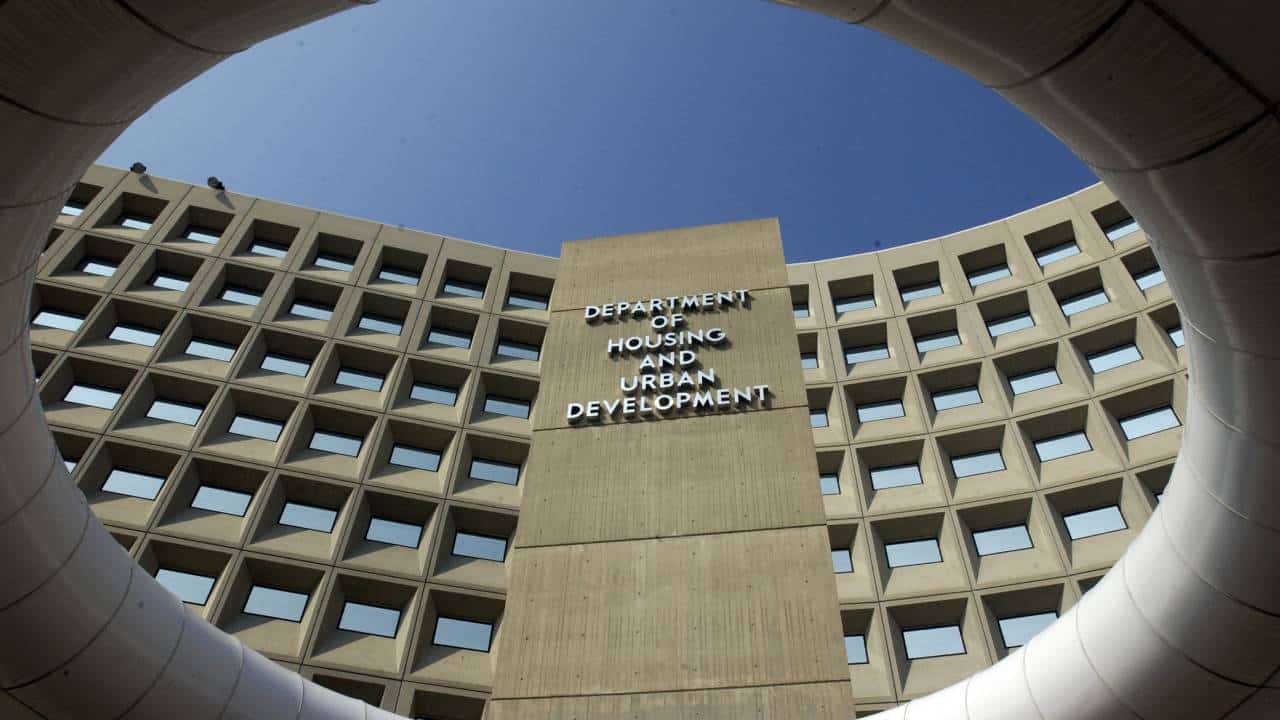
Tax Credit Advisor is pleased to publish the final installment of highlights from National Housing & Rehabilitation Association’s recent Fall Developers Forum. These highlights draw from a vibrant discussion during the Federal Housing Priorities and Program Updates panel, which brought together four expert speakers from across the industry to discuss just what the future of affordable housing programs may be in Washington.

Our first story presented remarks from Rockport Mortgage Corporation’s Eric Keifer, who provided helpful guideposts for navigating day-to-day relationships with federal partners. Our second story provided commentary from Michelle Molina, program director at the Connecticut for-profit housing consultant firm J. D’Amelia & Associates, who laid out a path for understanding the ongoing and seemingly endless changes to federal Department of Housing and Urban Development (HUD) guidance.
This week, we are highlighting discussion from Rob Hazelton, founder and CEO of national environmental consulting firm Dominion Due Diligence Group. While the other panelists helped provide some clarity for the current federal chaos, Hazelton took stock of long-term federal programs that remain robust in their ability to strengthen affordable housing pipelines. That long-term view? “Guardedly optimistic,” said Hazelton, citing positive regulatory changes and still-strong personnel (despite significant layoffs throughout the year).
Personnel Still Strong
Nearly 30 percent of the agency’s workforce has been reduced since the beginning of this second Trump administration, according to Politico. Despite this, Hazelton says that staff remain sharp and innovative, ready to continue meeting ever-increasing agency demands.
For example, Hazelton cites a HUD shift toward a “single underwriter model,” which finds HUD acting as “a super underwriter that can look at everything: environmental, engineering, architectural, whatever it may be, and make a decision and not have to go to every specialist in every department.” This relies on a degree of “trust in us, trust in the lenders to do the due diligence.”
Further, Hazelton said that there has been a push within HUD to find success at various field offices around the country and spread the competence throughout the agency.
For example, Hazelton detailed a trip to Dallas, where he was called to assist with interagency training. “[The Dallas field office] did the very best 221(d)(4) processing by far,” referring to HUD’s moderate-income construction and rehabilitation loan program. “They can slam out a 221(d)(4) application, because they trust in the reviewers and they know the process,” he said. However, “the Northeast can’t do one very well at all, and it takes them a long time.” So, HUD is using the Dallas office as a model to then train every field office in the country, and make overall processing efficient and smoother for practitioners nationwide.
Advertisement

This variance is just the tip of the iceberg. “We have a 12-page spreadsheet of every field office’s individual quirks,” Hazelton said. These quirks can sometimes balloon into “policy that’s never been cleared, and we then have to live with it for a year until someone does forensics, finds out how it was passed and… gets it thrown out.” With these intentional interagency trainings, there is now some hope that more standard and predictable practices will spread within the agency.
RAD Leads the Way
One program that Hazelton said may anchor positive affordable housing growth is HUD’s Rental Assistance Demonstration (RAD) program, which has gone through minor (but significant tweaks) over the past year. In late December 2024, HUD’s Office of Public and Indian Housing issued a notice increasing the percentage of units eligible for conversion under Section 18, allowing PHAs to convert up to 90 percent of units under Section 18 and 10 percent under RAD, up from the 80/20 split allowed under previous rules.
Hazelton lauded these changes: “This allows us to take a demolition–disposition, combine it with a RAD standard, and blend a 110 percent Fair Market Rate (FMR) rent with a RAD rent,” he explained. “In doing so, 90 percent of them are FMRs. Only 10 percent are RAD. The result is a pretty good rent.”
Additionally, the updated RAD regulations allow PHAs to pick either project-based rental or voucher assistance (PBRA and PBVA, respectively). This is a “huge” change, said Hazelton, since voucher administration tends to burden smaller housing authorities. “Smaller housing authorities don’t want to do vouchers, because they don’t have the voucher administration. They want PBRAs.” Now, “we’re about to see tertiary and secondary markets really benefit,” he said, since they can now pick PBRAs and benefit from higher incomes without the administrative burden.
Supercharging RAD usage is one major piece of the overall puzzle to providing more housing more quickly — one that has been severely lacking, as only 19 percent of the country’s public housing portfolio has been converted to RAD, according to Hazelton. “It’s been a slow uptake.”
Without RAD, fixing existing public housing is likely a long and costly venture, with over $169 billion needed just to preserve public housing units that currently exist, according to the Center for Public Enterprise. With RAD, partners can utilize the “free land” that many of these properties sit on, increasing density and unit counts. “We have such an economic engine in RAD that we’re not using right now,” Hazelton said.
With the boosted flexibility, Hazelton predicted that “we can create 900,000 units of PBRA stock in this country through RAD. It’s the only program we could do that through. It’s amazing.”
Deregulation Increases Flexibility
In addition to these RAD changes, Hazelton also stressed the potential upside of federal deregulation efforts, which the Trump administration has indicated it may pursue, issuing earlier this year, for example, a memorandum focused on cutting housing regulations to increase supply and lower costs.
These regulatory expenses are often referred to as “soft costs,” and stem anywhere from increased timelines to lawyer fees. According to Hazelton, 43 percent of affordable housing costs today are soft costs. “You can only affect labor so much. You can only affect material pricing so much. But deregulation affects soft cost and processing time greatly.”
Much of the deregulation stems from a more relaxed federal posture around risk mitigation, which Hazelton suggested was previously over-burdensome and gummed up the affordable housing pipeline. “We don’t need death by 1000 paper cuts to identify every risk in housing,” he said. “We identify what the overall risks are, and then let the contractor pay for greater risk valuation later on, making it smarter, faster, easier.”
These changes are already happening. One significant shift came in September, when HUD issued new guidance for one-time Operating Cost Adjustment Factor (OCAF) adjustments for RAD properties, allowing owners to increase rents beyond the standard schedule. This allows projects that are “very underwater with rents, because [typical] adjustments never caught up with inflation” to go in for a one-time adjustment that can help keep projects viable, Hazelton notes.
Beyond the typical qualifying factors that allow for this one-time adjustment — such as having experienced environmental damage — the new notice allows for a readjustment for owners planning major recapitalizations. To receive this adjustment, Hazelton said that he will work with clients to “produce a financing plan, [telling HUD] that our rents aren’t high enough to recapitalize.”
Advertisement