Case Study: Wisconsin’s Largest Affordable Development Takes Root in Milwaukee

By Michael Murney
6 min read
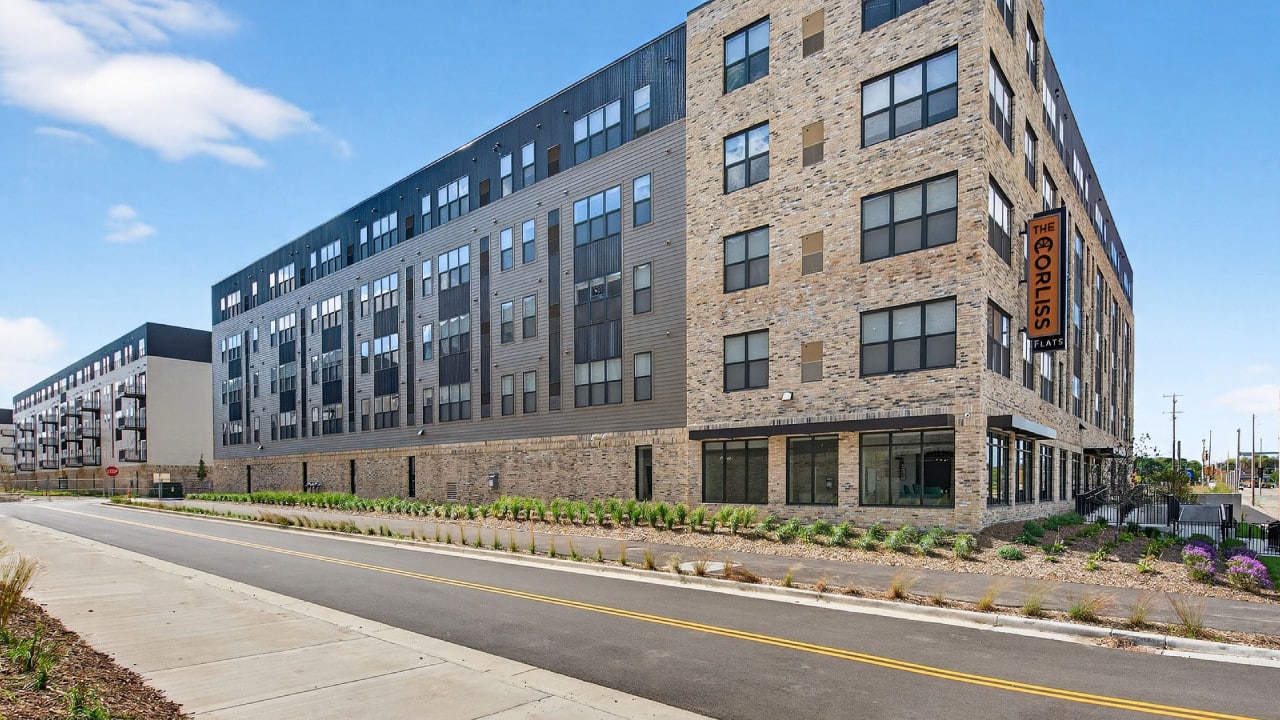
In Milwaukee, a sprawling new development is proving just how far the four percent Low Income Housing Tax Credit (LIHTC) can stretch when a sponsor, an investor and a city all agree on one expansive vision. The Corliss, built by Wisconsin-based Bear Real Estate Group, sits on a ten-acre former industrial site in Milwaukee’s Harbor District, and will bring 576 income-restricted units once its eight-building layout is fully constructed.
According to city officials and project partners, The Corliss will become the largest privately owned affordable housing development in Wisconsin history once complete.
Though the entire complex is not yet open, lease-up has already begun, with the first two buildings opening to new residents this past November. An additional two buildings were finished in early 2026; the remaining four buildings will come online through 2026.
Though the milestone Wisconsin development has made headlines with its scope, the mechanics behind the deal are what makes it particularly significant, with a single, unusually large equity placement, a multi-layered set of gap sources representing a network of committed stakeholders, and a compliance strategy designed for efficient management across multiple buildings.
“This project had the right combination of — let’s be honest — luck, timing, capacity and collaboration,” says Elmer Moore Jr., chief executive officer of the Wisconsin Housing and Economic Development Authority (WHEDA). The Corliss has succeeded, he adds, because it communicates “the why, the what, the why us, and the why now.”
Advertisement

Transforming the Harbor District & Bay View
Partners frame the project as a response to regional needs, not as an exercise in scale for its own sake.
“The scale is driven by the market and the lack of available housing options in the Harbor District and Bay View neighborhoods,” says S.R. Mills, CEO of Bear Development. Bear views the development’s eight buildings — two of which will be dedicated for seniors — as an “extension on the existing community,” rather than a single monolithic complex.
Lisa Gutierrez, director of affordable housing business development at U.S. Bank, says that the development’s ambitious scale also makes sense on an equity side, with a winning combination of need and sponsor capacity. As well, local relationships were critical, with both U.S. Bank and Bear having deep ties to Milwaukee. “Bear really know who the players are,” Gutierrez says, noting that a strong local track record allowed the team to assemble a range of city and state funders.
Such a large project will allow service not only in quantity, but also to a diverse range of household sizes, needs, and income type, all while delivering a level of quality that supports long-term performance. This aligns with WHEDA’s mission to deliver “nice units that are indistinguishable from what’s generally available in the market,” Moore says.
The project’s 576 units will be restricted for households earning between 40 and 80 percent Area Median Income, with 144 units reserved for seniors. Most units will be either one or two bedrooms.
The development is a welcome addition to the Harbor District, a trendy lakeside neighborhood with a deep working class history. Construction began in 2024 and rolled out in phases in 2025, with expected completion in 2026. Lease-up is underway and is “exceeding our expectations,” Mills says.
This staged approach was baked into the project’s timeline so that it can “remain compliant without promising all of the units placed in service simultaneously,” says Moore. Even for experienced sponsors, missing placed-in-service deadlines is one of the clearest ways a large LIHTC transaction can go sideways; Moore says the staged approach helps ensure an achievable for the unusually large project.
Early Pivot for Deeper Impact
The Corliss did not originally have such a wide-ranging vision. Bear originally planned for a more modest (but still impactful) sitewide redevelopment of around 300 units that would fold historic tax credits into the deal’s structure. However, the COVID-19 pandemic and ensuing market volatility, Mills says, forced a pivot. “What we thought we were going to be able to achieve was longer able to work within the economic constraints.”
Instead, the team stepped back and widened the project’s scope, allowing a larger stream of capital that would make the economics of the deal work.
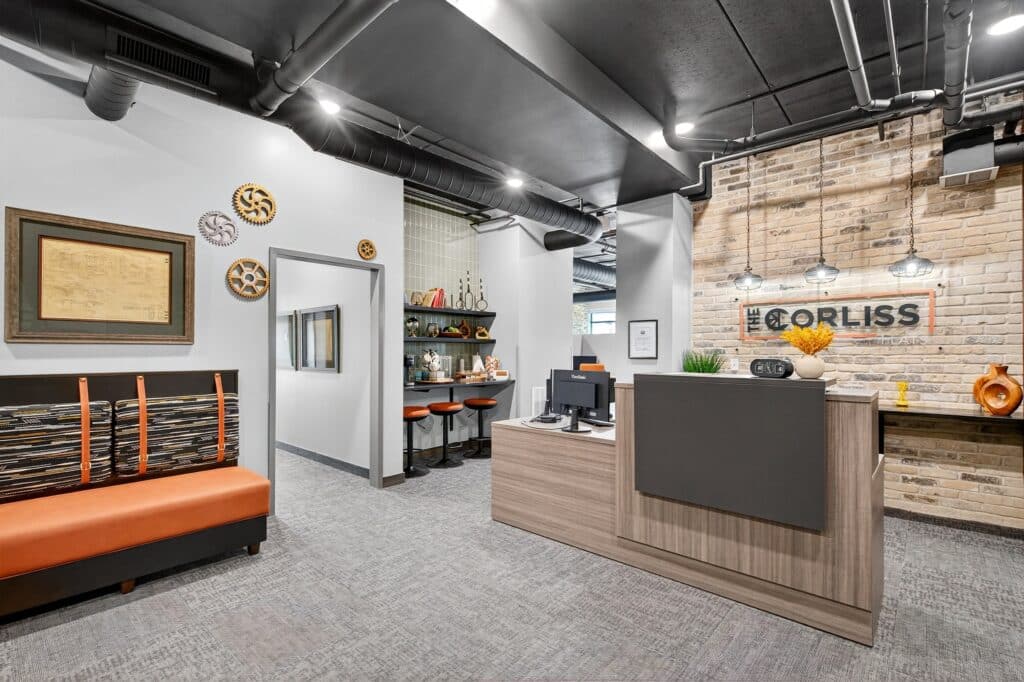
The pivot-to-scale resulted in a total development cost of $185,210,376 (about $321,546 per unit), with $122,286,184 devoted to hard costs, $56,964,192 for soft costs, and $5,960,000 for acquisition.
That composition — roughly two-thirds hard costs and nearly one-third soft costs — matches the broader reality for large, contemporary new-construction LIHTC deals, where inflation in labor and materials has pushed basis up faster than restricted rents.
The resulting capital stack that was “pretty vanilla,” says Mills, ”with the exception of a lot of the smaller grants and loans.”
The heaviest lift was done by federal four percent LIHTC equity, which totaled $95,709,276, provided by U.S. Bank. Even in an age where deals sizes are steadily increasing, this near-nine-figure amount is still unusual. “For one single investor to take that down is something that you don’t really see,” says Gutierrez. She says that the expense profile and unit mix supported a vision for durable performance, boosting the bank’s confidence in the deal.
Additionally, Bear made use of just under $11 million in tax-exempt bond reinvestment, resulting in a healthy boost of pre-conversion income to help the project pencil.
Other project sources were:
- First mortgage: $74,365,000
- City of Milwaukee Brownfield loan: $1,250,000
- Subordinate loan: $1,183,000
- National Housing Trust Funds: $878,000
- Milwaukee Metropolitan Sewerage District stormwater grant: $1,000,000
- Managing member equity: $100
The Corliss did not take advantage of Wisconsin state housing tax credit, which has become oversubscribed in recent years. However, the project will utilize $9.2 million in local Tax Incremental Financing (TIF), a “pay-as-you-go structure” that will support project completion, says Gutierrez. Payments will run between March 1 through the end of construction, which the agreement stipulates must be completed by Dec. 31 of this year.
The TIF agreement also includes procurement and workforce requirements that aim to benefit the local community, Gutierrez says, including targeted utilization of certified small business enterprises and a requirement to construct an off-street bike path through the property with a permanent public easement.
Named after a historic engine that powered the once-bustling industrial area, The Corliss was already positioning itself to embed in existing community prior to the TIF requirements. Moore credits early groundwork by a local business-improvement initiative, Harbor District, and preexisting city efforts for establishing priorities and building receptivity toward large-scale affordable housing proposals. This groundwork, paired with Bear’s already robust balance sheet and internal systems, made the transaction “fairly safe” against any surprises, even on such a large, complex site.
