An Industrial Icon is Reborn in Cleveland

By Pamela Martineau
8 min read
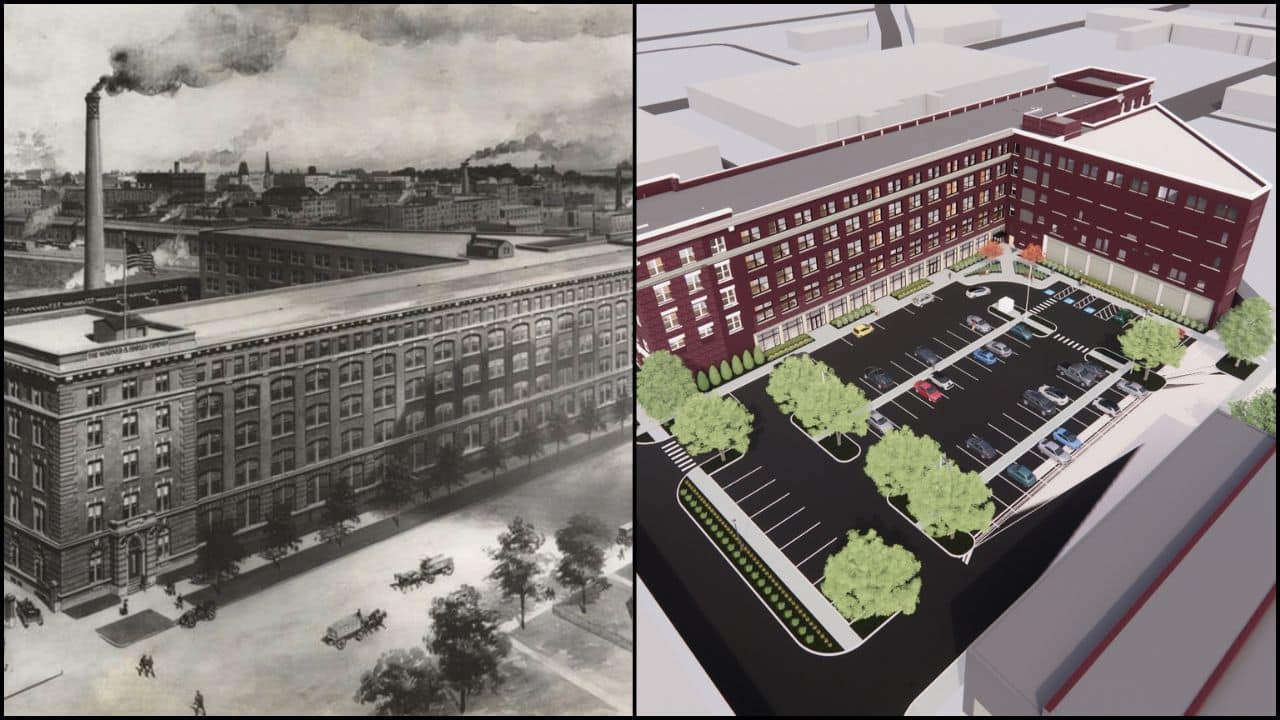
It sits like an elder statesman on Carnegie Avenue near East 55th Street in Cleveland, a monument to the city’s deep roots as a former manufacturing powerhouse. Built in 1910, the Warner & Swasey Co. factory building was once home to world-class machinists renowned for telescopes and other precision instruments. However, shuttered in 1985, the building has of late only been home to memories and the occasional Cleveland street artist looking to add their mark to the concrete canvas.
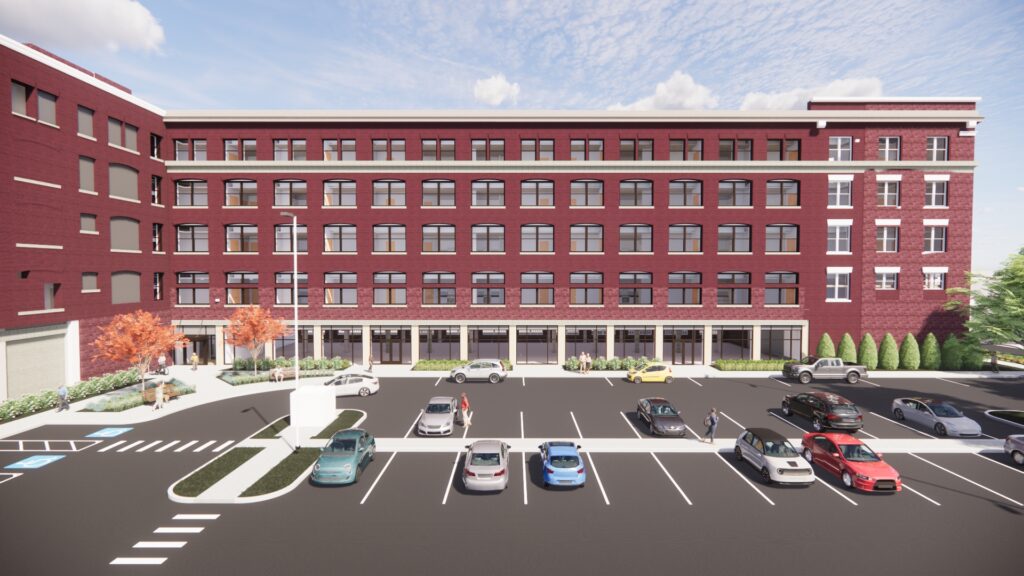
Now, the elegant building will finally take on new life after over 40 years of vacancy, when it reopens in late 2027 as a mixed-use development offering 112 affordable units and, later, additional units and commercial endeavors.
“It was clear to me very early on that Warner & Swasey represents more than just another vacant industrial building in the city. It’s a landmark,” says Geoff Milz, vice president of the midwest region for Pennrose, which redeveloped the site with MidTown Cleveland Inc., a nonprofit neighborhood group.
“It’s a significant building in Cleveland’s history,” adds Ashley Shaw, executive director of MidTown Cleveland. “Still, to this day, when our team goes out into the community or talks about this project, somebody tells us, ‘Oh, I had a brother that used to work there.’ Or, ‘My mom used to work in that building.’ It seems so many people have a personal connection to that building.”
The $64 million project closed in January, with a groundbreaking occurring shortly after.
Long, Arduous Journey
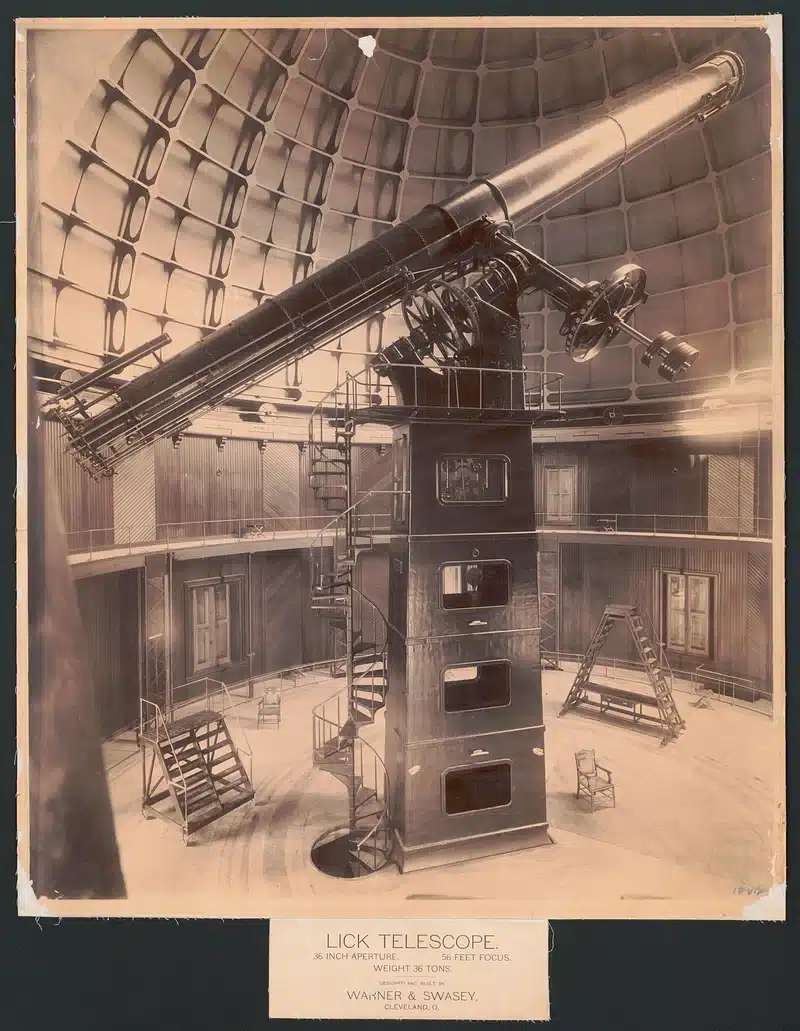
The original machine tool shop owned and operated by Worcester Warner and Ambrose Swasey was built in the late 1880s. The pair got their start building large telescopes for observatories throughout the country, even building what was at the time the world’s largest refracting telescope for the University of California’s Lick Observatory. However, it was Warner and Swasey’s contributions to machining that grew the company into a national manufacturing powerhouse; their invention, the No. 1 Turret Lathe, became a revolutionary machining tool that helped enable mass manufacturing.
By 1904, the partners had outgrown their relatively modest shop and needed to expand to keep up with the demands of the increasingly industrial American economy. So, they tore the existing building down and hired Arnold Brunner, a well-known architect, to design a building that could handle an uninterrupted production schedule with significant output.
The resulting five-story, 220,000 square-foot brick factory — sporting a distinctive sawtooth roof — reopened in 1910, and is the primary structure still onsite today. By 1928, the factory was the world’s leading manufacturer of turret lathes, later employing up to 7,000 Clevelanders at its peak.
As industry was declining elsewhere in the Midwest, Warner & Swasey began to struggle financially. In 1980, the company was bought by Bendix, a large national manufacturing and engineering corporation, which led to organizational restructuring and an eventual closure of the factory in 1985.
In a stroke of preservation luck, the city of Cleveland stepped up and purchased the shuttered factory, which it then owned as a vacant site for nearly 40 years while searching for an adequate developer to take on the massive project. However, it wasn’t until about eight years ago that MidTown Cleveland approached the city with an ambitious plan: Why not redevelop the factory and site as a Low Income Housing Tax Credit (LIHTC) project?
Pieces fell into place thereafter. “The city came on board, and the city and our organization selected a development partner with Pennrose,” explains Shaw. “We needed a private developer partner and they brought a ton of expertise and resources.”
Milz says MidTown Cleveland was instrumental in gathering community support. “It’s the community that made this happen,” he says. “We just got to do the cool work of pulling it all together.”
Multilayered Capital Stack
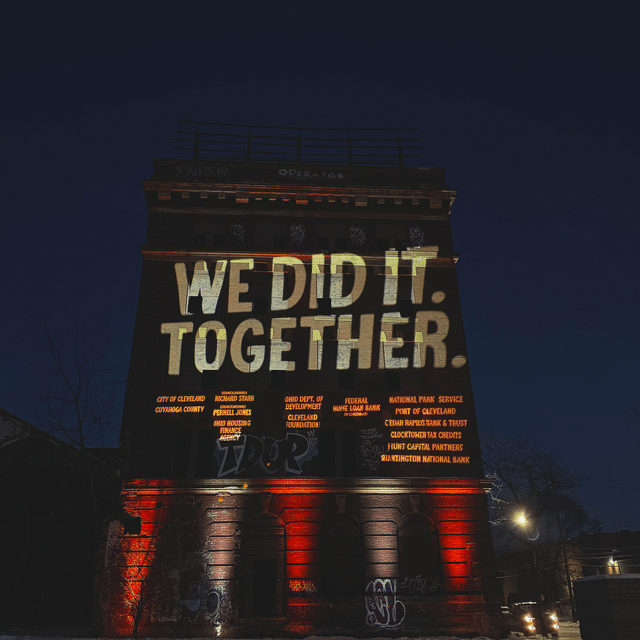
As large as the building is, the capital stack may be more imposing, with an eclectic pastiche of some 25 local, state, federal, and private entities in addition to LIHTC, federal and state Historic Tax Credits (HTCs). Interestingly, this project may be the last in the state to combine federal LIHTC dollars with the state’s HTC program, since Milz notes that about two years ago, the Ohio state legislature barred the use of state HTC with LIHTC. This project was awarded HTCs in the last round before the ban was legislated and therefore was grandfathered in.
Additional funding sources include: state and Cuyahoga County brownfield funding for site cleanup; Cuyahoga County casino tax funding; America Rescue Plan Act funds; federal HOME funds; emergency rental assistance funds; deferred developer fees; and loans from the Cleveland Foundation, the Federal Home Loan Bank of Cincinnati and the city of Cleveland.
Milz says the deal could not have happened without the broad coalition of community entities lined up to support. For example, he points to a complicated dance that occurred in December 2024, when a Cuyahoga County employee called, saying that a different deal had fallen through and that there were now $2 million in newly available, but quickly expiring, emergency rental assistance funds. To secure the funds, Milz then approached the city, which under a prior agreement was set to sell Pennrose the Warner & Swasey factory for one dollar. Instead, Milz asked city leaders to sell that building to Pennrose for $2 million, then loan that money back to the project so they could access the rental assistance funds.
Advertisement

Edward Peppers, vice president of economic development and real estate for MidTown Cleveland, says the Cleveland Port Authority also helped the project’s capital stack by financing some of the construction materials through a capital lease program. The port does not pay sales tax on construction materials, which allowed a tax break for the project.
Peppers adds that the Ohio Housing Finance Agency also was able to reallocate “other tax credits in the last hour to help us close the deal,” after increases in costs pushed the project from $55 million to $64 million.
“So many people could have said ‘no,’ and it just takes one ‘no’ for the whole project to go away,” Milz says. “But every single person said ‘yes.’”
Historic Preservation Key to Impactful Future
Because the building was a former factory, it inherently requires significant environmental cleanup. Fortunately, the bulk of site remediation occurred during initial city ownership beginning in 1985. Still, Milz says an additional $2 million of work is needed before final move-in approval, primarily targeting soil removal.
Given the effort already taken to preserve the structure, it is unsurprising that no expense is being spared to retain the factory’s industrial character for future tenants. “It definitely has good bones,” Shaw says of the building.
Master craftspeople have been hired to assist in preservation, especially the masonry for the parapets. The steel beams in the building also pose a restoration challenge, since the composition of steel has changed over the decades. A specific protocol needed to be developed to effectively weld onto the steel in the building. It requires removing “coupons” of steel — three-by-five-inch slices — and having them tested by steel specialty shops to learn the best way to work with them.
The buildings’ windows and many of its original hardwood floors will also be replicated to preserve their historical character.
All of these minute details add up. “We’re at about $600,000 a unit, which is double the cost of a normal unit,” says Shaw. “So, the subsidy in this had to be enormous. We can’t support much permanent debt.”
A mix of studios, one-, and two-bedroom units will be offered to tenants earning between 30 and 60 percent of Area Median Income. Lease up in expected to begin in December 2027.
The second phase of the project, after lease up, will be filling a 26,000 square-foot portion of the building with commercial entities and additional residential units. Shaw says that the partners are looking for impactful businesses, such as a credit union or perhaps an educational institution. “We want to make sure it contributes to the community,” she says.
Advertisement

Homage to Street Art
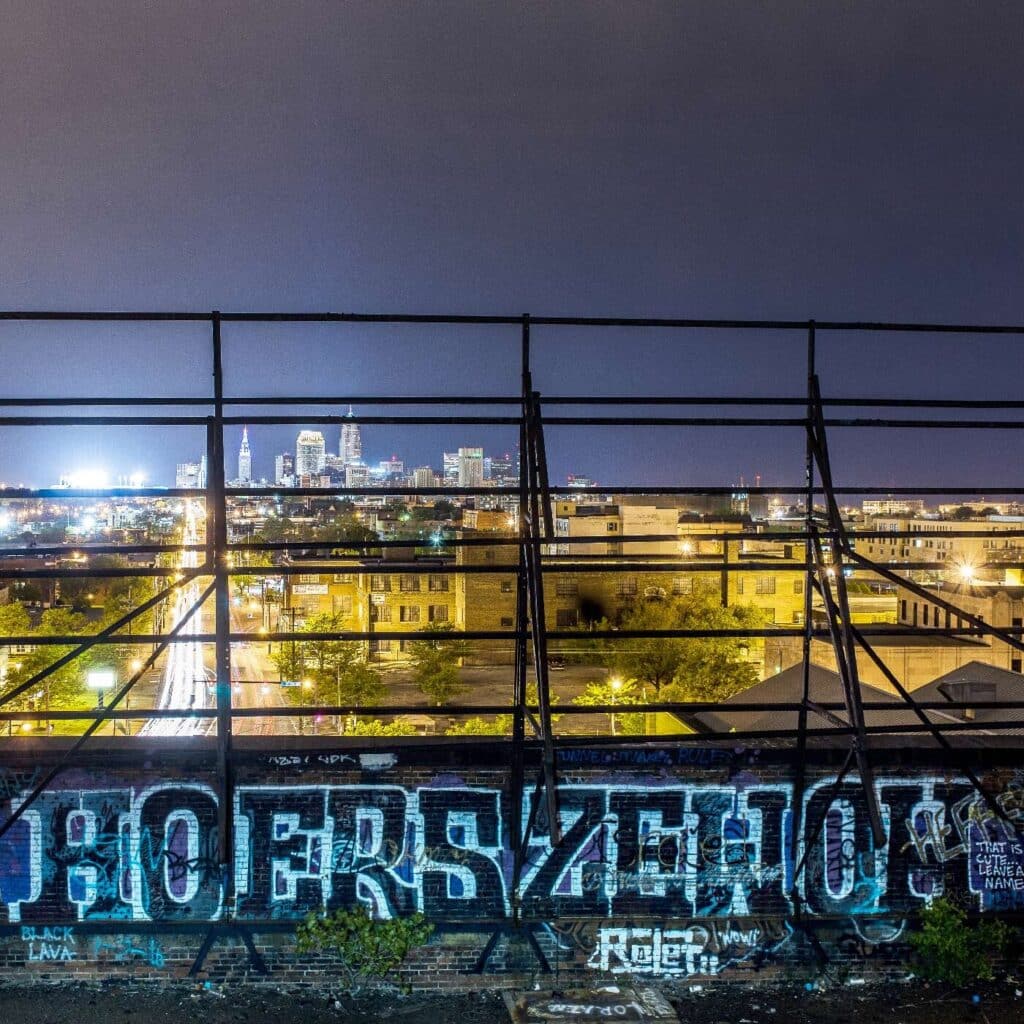
During the decades the building sat vacant, it became a canvas for street artists who spray-painted compelling graffiti on the inside and outside of the structure. Developers are working to preserve that heritage through a book and photos that will be displayed at the site.
“There’s tons of graffiti, some of it profane, some of it beautiful,” says Milz. “We’re documenting that graffiti era and hope to include it along with historical images of the buildings.”
MidTown Cleveland has worked to not only recognize the history of the area’s graffiti, but also embrace local street art as a tool for community connection. In 2021, they helped organize Cleveland Walls!, a festival that brought 23 local and national artists into the neighborhood to paint many of the surrounding blank walls into sanctioned public art.
The festival featured Rebirth, a documentary on Warner & Swasey’s unique graffiti culture. Ease of access paired with stunning rooftop views of downtown’s skyline made the building an immediate destination for top local artists.
“Perhaps the proliferation of this beautiful scrawl is a key indicator of an open, free and creative society,” the documentary’s narrator concludes.
