NEF and NeighborWorks Capital Announce Closing of Inaugural National LIHTC Equity Fund

By Pamela Martineau
8 min read
In November, National Equity Fund (NEF) and NeighborWorks Capital closed the NeighborWorks Capital Equity Fund, a first-of-its-kind $110.4 million national Low-Income Housing Tax Credit (LIHTC) fund serving nonprofit developers in the NeighborWorks America network.

“The objective is to empower developers who deserve support and are engaged in work that reflects the aspirations of the communities they serve,” says Jim Peffley, CEO of NeighborWorks Capital, a nonprofit Community Development Financial Institution (CDFI). “It’s both an effort to address what we view as inequity in the market and to help these nonprofits get more leverage in the marketplace. This is the first step in NeighborWorks Capital’s efforts to help this group of nonprofits engage with investors differently.”
Peffley says that the work does not stop now that this first fund is closed, and says the team is preparing to launch additional NEF-partnered funds in the future. “We fully expect to do a lot more in 2026,” he says. “We are looking to grow this partnership.”

Liz Hibbard, NEF’s senior vice president, capital markets, says the fund not only offers transparent terms to the network’s mission-driven, nonprofit community developers, but also provides market expertise throughout the LIHTC process.
“Often, these community-based nonprofit organizations are getting out-of-market terms,” Hibbard says. “We are looking at financial covenants that can oftentimes be detrimental to smaller, nonprofit organizations. Because of their affiliation with the NeighborWorks America organizations, they have the benefit of support — not just financial support, but also capacity building and consulting. They are part of a community of accountability, which enhances their strength. Network members have a level of support that other developers don’t have access to. That is valuable to investors.” Now closed, this inaugural LIHTC fund supports seven developments offering 517 units of affordable housing across the country.
The Power of Nonprofit Partnerships
NeighborWorks America began its first financial partnership with NEF in 1990. In 2000, NeighborWorks Capital was founded by NeighborWorks America as a national, nonprofit CDFI. Those partnerships, and others, helped the combined nonprofit members of NeighborWorks America grow into a national powerhouse in affordable rental development.
By 2022, the NeighborWorks America network of nonprofit developers collectively produced more affordable housing throughout the nation than the top five for-profit developers combined. Since then, it has grown, exceeding the output of the top nine for-profit developers. Altogether, the members of NeighborWorks America are the largest producer of affordable rental housing, but until the partnership between NeighborWorks Capital and NEF, they have not engaged investors as a collective.
The equity fund developed following conversations between Peffley and Hibbard that strategized how to more effectively deploy LIHTC equity funding across the NeighborWorks America network. Eventually, the pair decided to leverage NEF’s position as one of the largest syndicators in the country to help efficiently move investment dollars directly into NeighborWorks nonprofits, while also providing technical expertise to maximize that fundings’ impact.
“These nonprofit developers now have a syndication partner that is focusing on them as a distinct customer base and is committed to growing the value they deliver year after year. That alone is a huge advantage,” Peffley says.
High-Impact Investing
The NeighborWorks Capital Equity Fund is comprised of equity investments from five investor partners: Capital One, First Citizens Bank, Northern Trust, Wells Fargo, and Wintrust. All five of the investors are long-time collaborators of NEF and share a mission-oriented approach to delivering socially impactful capital solutions.
“One of our learning moments was realizing that a lot of our investors had been partnering with NeighborWorks organizations without realizing that they were NeighborWorks organizations,” explains Hibbard. “So, there were pockets of support for the network, but not a clear understanding of the power of the network. This was our opportunity to bring a collective spotlight on a network of high-performing, community-based organizations.”
Hibbard and Peffley found that this type of fund would resonate with investors on a number of levels. As a multi-investor fund, the NeighborWorks Capital Equity Fund pools capital from multiple investors to spread risk and leverage impact. Additionally, NeighborWorks network organizations share their development pipeline with NeighborWorks America, which helps identify investors with CRA needs in locations where network members are building. This in turn benefits both developers and investors. The fund also empowers investors to create deep, long-standing relationships across the affordable housing ecosystem — especially with community-focused nonprofits.
NeighborWorks America is a congressionally chartered nonprofit and has received annual appropriations since its creation in 1978. The national organization then distributes the funding across its network of 245 local housing nonprofits while also providing technical expertise, training, and support. This leads to a snowball effect of support for network organizations; according to internal figures, NeighborWorks America attracts $71 of public and private investment for every dollar of federal funding.
“There’s an impressive machine behind these organizations that provides a capacity and support system that most investors were unaware of. It’s been a really important, ancillary part of this fund to tell that story,” Hibbard adds.
Fair and Equitable Terms for Community-Driven Nonprofits
Developers within the NeighborWorks network say the fund offers uniquely fair and equitable terms that allow them to expand the scope of projects they work on.

Louis Liss, director of Real Estate Development for the California-based Eden Housing, says “working with the fund helped us take on a more complex project that may have been too cumbersome or complicated for a more traditional investor.”
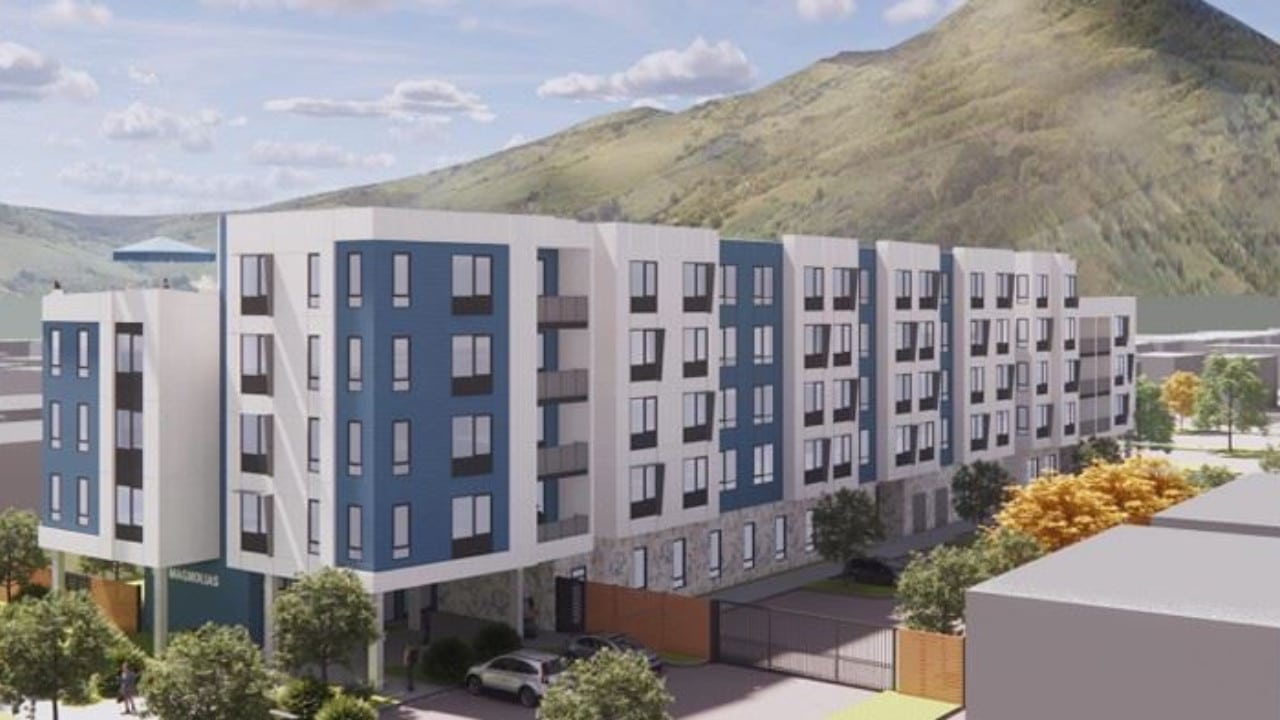
That project is The Magnolias, a 66-unit affordable housing development in the city of Morgan Hill comprised of one-, two-, and three-bedroom units targeting unhoused individuals and families as well as veterans and agricultural workers. When completed, it will include rapid rehousing and permanent supportive housing as well as units targeting extremely low-income (up to 30 percent Area Median Income), and very low-income (up to 50 percent AMI). It is being developed with a partnership between Eden Housing and Santa Clara County.
According to Liss, the closing process using the NeighborWorks Capital Equity Fund went smoothly, and the LIHTC fund delivered preferable terms, such as nonprofit-favorable Year 15 exit provisions.
“Sometimes we have to weigh our future as a long-term owner against today’s deal economics,” Liss says. “On this transaction, deal terms important to a long-term owner were offered front and center. It was understood that we were looking for a strong level of protection for a developer that is interested in preserving affordability rather than selling at Year 15.”
Such beneficial terms are becoming increasingly important, Liss adds. “These deals with today’s economics are getting more and more complicated and unfavorable for developers, which means we have to do a lot of creative thinking with our partners.”

Steve Laferriere, director of real estate for the Massachusetts-based The Neighborhood Developers, says that working with the NeighborWorks Capital Equity Fund gives his organization access to investment terms that larger, competitive for-profit developers receive.
“We’re doing as equally creative work, arguably better work, that’s at a different scale and is focused on the communities we serve,” Laferriere says of his firm’s work in comparison to larger for-profit developers.
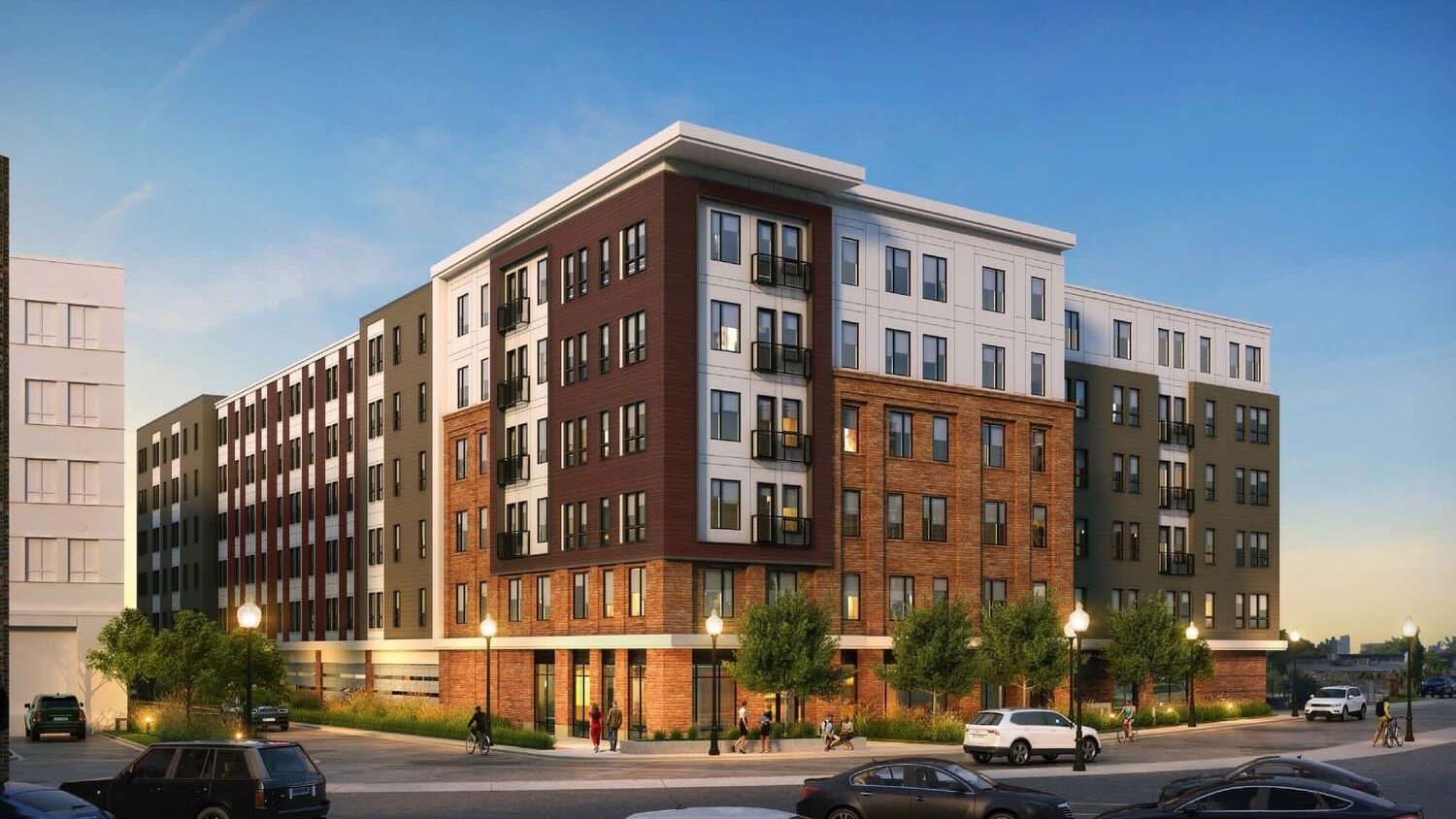
The Neighborhood Developers focuses on three communities north of Boston. The firm used NeighborWorks Capital Equity Fund on its 125-unit 25 Garvey Street property in Everett, Massachusetts.
Laferriere says it was not just the “bottom-line dollar amount” they received on the yield on the tax credits through working with the fund, but all the other considerations they received through the fund that made it so powerful for them.
“We have a spreadsheet with about 75 different factors that we look for to try to compare proposals,” Laferriere explains. “It’s not just the bottom-line number that we look for. We’re looking at whether they pay in later, or they’re not letting you take any cash flow, or they aren’t going to let you exit the partnership in year fifteen at the lowest statutory price. Some deals might not be worth that upfront payment.”
Liss says tools such as the NeighborWorks Capital Equity Fund are now more important than ever for nonprofit developers given the challenging tax credit equity market. “We’re excited about the expansion of the tax credits, but there is not more capital to buy them, and pricing has been going down. So, the existence of new tools like this right now is vital.”
Liss’s experience is squarely what NEF was targeting with the creation of this fund, Peffley adds. “What makes this fund different is it targets these mission-forward organizations and gives them terms that large developers can secure because they have leverage with investors,” he says. “NeighborWorks members are the largest producer of affordable rental housing, and they should have access to fair and equitable terms. Now, they do. We’ve come together to serve the creation and financing of affordable housing throughout our country.”
Advertisement