Understanding HUD’s Recently Leaked Draft Rules
Highlights from NH&RA's Fall Developers Forum (Part Two)

By Michael Murney & Abram Mamet
5 min read
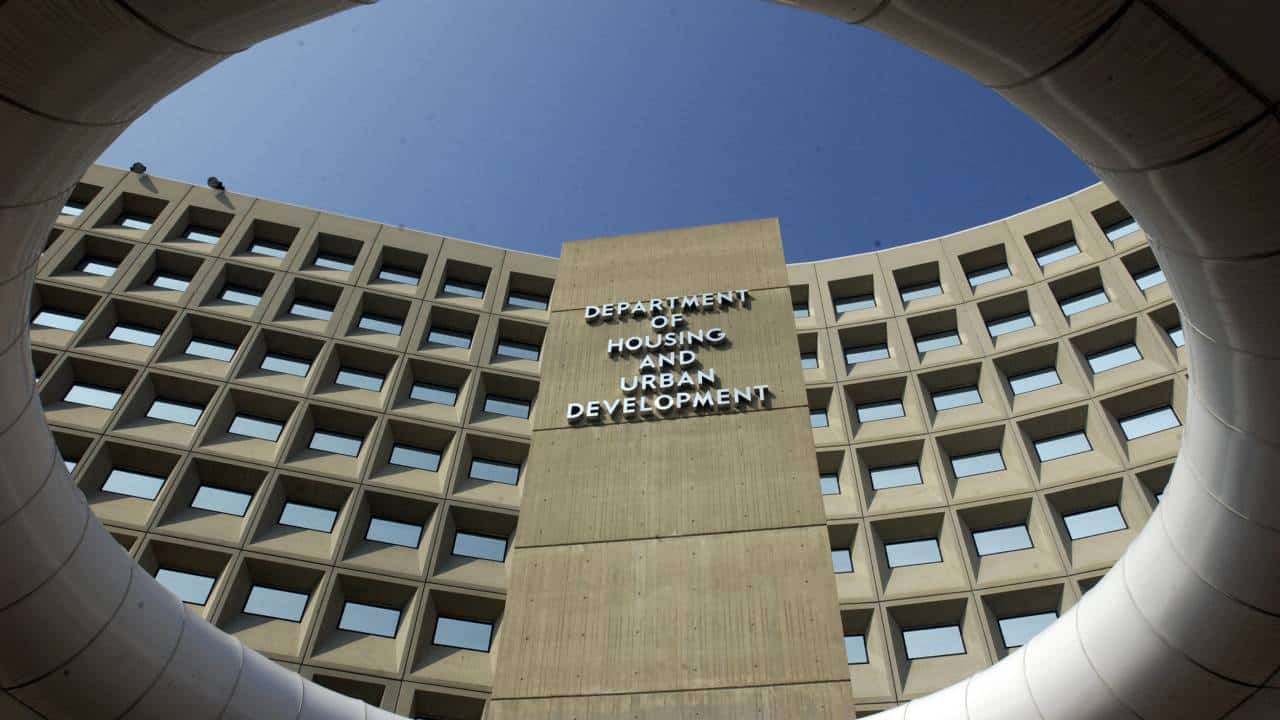
Last month, Tax Credit Advisor published the first installment of highlights from National Housing & Rehabilitation Association’s recent Fall Developers Forum. These highlights draw from a vibrant discussion during the Federal Housing Priorities and Program Updates panel, which brought together four expert speakers from across the industry to discuss just what the future of affordable housing programs may be in Washington.
Our first story presented remarks from Rockport Mortgage Corporation’s Eric Keifer, who provided helpful guideposts for navigating day-to-day relationships with federal partners.

This week, we are sharing commentary from Michelle Molina, program director at the Connecticut for-profit housing consultant firm J. D’Amelia & Associates, who centered the myriad federal changes on the lives of individual tenants.
Federal Turbulence Hits Home
There is, of course, much uncertainty in Washington. “The original Presidential budget request [contained] a lot of zeroes,” moderator Joe Lynch said in his opening marks, referring to the President Trump’s early-term plans to remove critical funding sources for affordable housing — such as the HOME, Section 202 and Choice Neighborhoods programs — and to combine other rental assistance subsidy programs, like Housing Choice Voucher/Section 8, into one single “State Rental Assistance” block program.
This initial budget request would have vastly shifted the federal rental subsidy landscape, putting untenable pressure on states (particular small ones) to support expensive and administratively burdensome housing programs. This would undoubtedly cause pain for developers and tenants alike, as partial- or non-payment of project-based or tenant-based subsidies would lead to both eviction and mortgage default.
However, those proposals quickly shifted. “Everybody got very nervous,” Lynch continued, “but if you’ve been around for a long time, you’d realize that presidents such as President Clinton have had the same proposed budgets. … If you look at it [now], where the Senate Committee and House Committee have come out with their numbers, the funding on vouchers has creeped up substantially.”
Indeed, Molina assured the audience that housing subsidies should continue. Though numbers have not increased, future “funding looks decent — it looks stable,” allocating FY2026 subsidies that equal FY2025 numbers.
Despite this guarded victory, Molina cautioned that there may still be trouble on the horizon, pointing to two recently leaked draft rules that could ultimately remove thousands of families from Department of Housing and Urban Development (HUD) benefits.
The first draft rule would allow greater individual Public Housing Agencies (PHA) discretion in implementing work requirements and time limits on households receiving HUD subsidy.
Currently, only Moving-to-Work (MTW)-designated agencies — which are specific PHAs granted extra latitude in implementing HUD programs — are allowed to impose either work requirements or time limits. Within MTW agencies, these requirements are rare: According to reporting from NPR earlier this year, about 40 of the 139 MTW PHAs in the program’s history had imposed either requirement. As of 2022, only seven MTW agencies had active work requirements, according to a HUD report published that year.
Now, under draft rules, any PHA would be allowed to impose work requirements. (Originally, HUD leadership aimed to make these requirements mandatory across the country, but were persuaded by career staffers to make requirements voluntary, according to ProPublica reporting published in September).
Advertisement

Even with the softening of the proposed rule, Molina still expressed concern that implementation may cause undue burden on housing providers. “The property managers have to monitor it” themselves, she said. “[I thought] we were trying to reduce administrative costs and burdens!”
And of course, these draft rules — if proposed and adopted — would ultimately create more regulatory hurdles for tenants who may otherwise be housing vulnerable. “I just feel, personally from my heart, doing this for 32 years, that that’s not enough time for somebody to get on their feet,” Molina said. “Two years is tomorrow, in my eyes.”
The second draft rule targets immigrants living in HUD-assisted housing — “a high priority on this administration’s list,” Molina said.
The rule would change eligibility for families with mixed immigration status (in which at least one member of the family is in the country legally and others are not, or have an immigration status that makes them otherwise ineligible for assistance). Under current rules, these families are eligible to live in public housing and are allowed to receive prorated HUD subsidy so that only the eligible member receives federal benefits.
Under the new draft rule, no one in those families — including legal citizens or eligible residents — could receive subsidy. These changes would cause nearly 80,000 people to lose housing assistance, according to the Center for Budget and Policy Priorities, with children being the most vulnerable.
These increased regulatory proposals are “ironic,” remarked Lynch, since they occur in parallel with an erosion of tenant representation within HUD. “Now that the Fair Housing Office has been gutted, where are you going to go to contest these issues?”
The Importance of State Subsidy
Given the murky waters in Washington, Molina encouraged individual states to ramp up local housing initiatives to provide insulation against federal uncertainty “so that properties will work and can sustain enough revenue for the future.”
For example, Molina points to Connecticut’s state Rental Assistance Program (RAP), which mirrors Section 8. “We’re very fortunate in Connecticut,” she said, noting that over 1,000-units of tenant- and project-based subsidies were added in the RAP program’s 2026 budget.
The funding’s efficiency is maximized by leveraging the specialties of various state agencies, ensuring that the RAP vouchers not only house, but uplift, Molina said. “We’re having Memoranda of Understanding between different state agencies,” such as the Department of Social Services and the Department of Developmental Services, where each agency is following the tenant through their housing journey and providing support and additional subsidy where needed. “We’re doing a lot more with the money.”
Other programs, like a philanthropy-funded direct subsidy program and an opioid treatment program funded by settlements with pharmaceutical companies, show promise in a state with the most constrained housing market in the nation, with 1.07 housing units per household, according to Connecticut’s 2025-2029 consolidated housing plan.
Advertisement